Hollywood has a strange relationship with sports betting. For about sixty years it treated bettors as a cocktail of pool-hall hustlers, mob accountants and men who sweat through their shirts in the seventh inning. Then sports betting got legalized in most of the United States, the industry crossed nine figures in handle every single weekend of football season, and suddenly the "degenerate gambler" became the protagonist of prestige cinema. The wardrobe got better. The math got worse.
What the best sports betting movies actually do, when they are honest, is show you the psychology that costs people money. The chasing. The story-stacking. The conviction that this one is different. You can read every book on Kelly criterion and closing line value and still get walloped by the same emotional traps Paul Newman played in 1961. The films below have aged because the human nervous system has not.
Here is the list, ranked roughly by how much they actually understand about the thing they are depicting, with the betting lessons that fall out of each. No moralizing, no "remember to gamble responsibly" sermons every two paragraphs. You are an adult. You know what a parlay is.
1. Uncut Gems (2019)
The Safdie Brothers' panic attack on celluloid is the most accurate film ever made about what it feels like to be down bad on a Tuesday and convinced the Wednesday slate is your ticket out. Adam Sandler plays Howard Ratner, a New York jeweler whose real day job is constructing the most architecturally insane parlays in cinematic history. His climactic three-leg bet on Game 7 of the 2012 Celtics-Sixers series is the scene that broke a generation of casual fans into actual gamblers.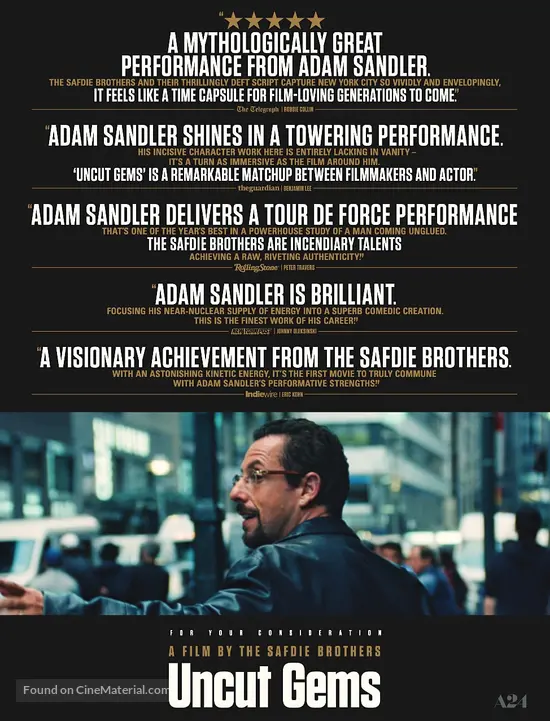
Here is the thing nobody tells you about Uncut Gems, though. Howard's bets are technically nonsense. Sportsbook expert Blair Rodman has pointed out that no real book, legal or otherwise, would have accepted Howard's six-leg parlay of correlated player props on Kevin Garnett in Game 3. Tipoff bets parlayed with first-half spread parlayed with full-game spread parlayed with player blocks? Books shun correlated parlays for the same reason casinos shun card counters. When parlaying a game's first-half total to the full-game total, if your team covers the first half, there's an enhanced chance it will also cover the game total, which is why books either ban these combinations or price them at a separate, brutal multiplier.
The Ringer ran the math on the climactic Game 7 parlay and reached a conclusion that should haunt every parlay enthusiast: if Howard had simply bet on every leg of his parlay individually, he would have won five of six bets and gone up tens of thousands of dollars. Instead, he made a parlay dependent on Garnett dominating in every possible statistical category, and should have lost. That is the parlay tax in three sentences. The hold on a typical multi-leg parlay sits around 30 percent, compared to roughly 4.5 percent on a straight side bet. The book loves Howard. The book has Howard tattooed on its bicep.
What Uncut Gems gets dead right is the dopamine architecture. The way Howard cannot just enjoy a winning bet. The way every win has to fund a bigger swing. That is the part you should watch closely, then never imitate.
2. Two for the Money (2005)
A movie about a former college quarterback turned sports tout who picks games at an 80 percent clip, mentored by an Al Pacino character so unhinged he gives motivational speeches about gambling addiction during cardiac events. The real magic of Two for the Money is what it accidentally exposes about the tout industry.
The film is loosely based on a real handicapper named Brandon Lane (changed to "Lang" for Hollywood reasons nobody can explain). Slate did the dirty work after the movie came out and pulled his actual record. According to The Big Green Machine, a service for which Lane is one of a handful of handicappers, he was 9-14 in NFL games through last weekend. That's not exactly winning. In college football, he's a tawdry 18-37-1.
So the movie sells McConaughey's character as a generational savant hitting 80 percent. The real guy was hitting under 40 percent. This is not a knock on Brandon Lane personally. This is the entire tout industry summarized in one IMDb adjacent footnote. There are upward of 1,500 tout services in the United States today, unlicensed and largely unmonitored, that offer tips over the phone, on the Internet, and by mail. They sell something called "dimes," where in gambling slang a dime is a thousand dollars. A "300-dime release" means they want you betting 300 grand on this game. You read that correctly.
The lesson here is not "touts are scams," because some are legitimate handicappers. The lesson is that hitting 53 percent against the spread over a meaningful sample is elite. Hitting 55 percent gets you a yacht. Anyone telling you they hit 80 percent is selling you a watch in Times Square.
3. The Hustler (1961) and The Color of Money (1986)
Pool, technically. Sports betting in spirit. Paul Newman as Fast Eddie Felson played twenty-five years apart, first as the cocky kid who learns the hard way that talent and bankroll discipline are not the same thing, then as the aging wolf teaching Tom Cruise the same lesson from the other side of the table.
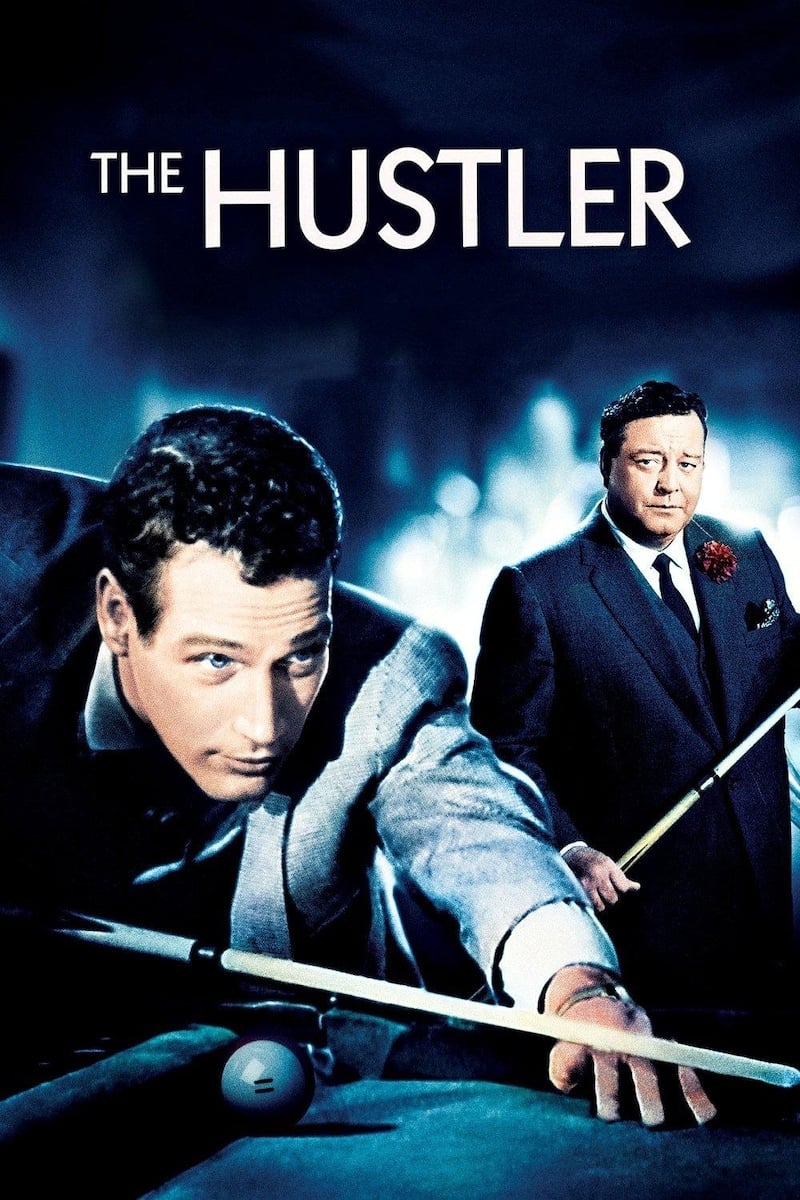
The Hustler is the cleanest cautionary tale ever filmed about variance and tilt. Eddie can beat Minnesota Fats. Eddie does beat Minnesota Fats. But Eddie does not know how to leave. He keeps playing, keeps drinking, keeps doubling down, and watches a winning night drift into a losing year because he could not separate his ego from his expected value.
The Color of Money is more interesting from a pure betting psychology angle, because Newman's older Eddie is essentially running a hedge fund. He stakes Cruise's character, manages risk, picks spots, manipulates lines through deliberate underperformance. It is a master class in something every recreational bettor refuses to learn: the size of your bet matters more than the side of your bet. You can be a 56 percent picker and lose money for the year if you bet bigger on losers than on winners. Eddie understood this in 1986. Most weekend warriors have not figured it out in 2026.
4. Eight Men Out (1988)
John Sayles' meticulous reconstruction of the 1919 Black Sox scandal is required viewing for anyone who wants to understand why integrity monitoring exists and why every legal sportsbook in the United States now has a compliance department the size of a small law firm.
Eight Chicago White Sox players took money from gamblers to throw the World Series. The favorites lost. Bookmakers and bettors who knew the fix was in cleaned up. Eight men got banned for life, including Shoeless Joe Jackson, whose case is still litigated in sports bars a hundred and seven years later.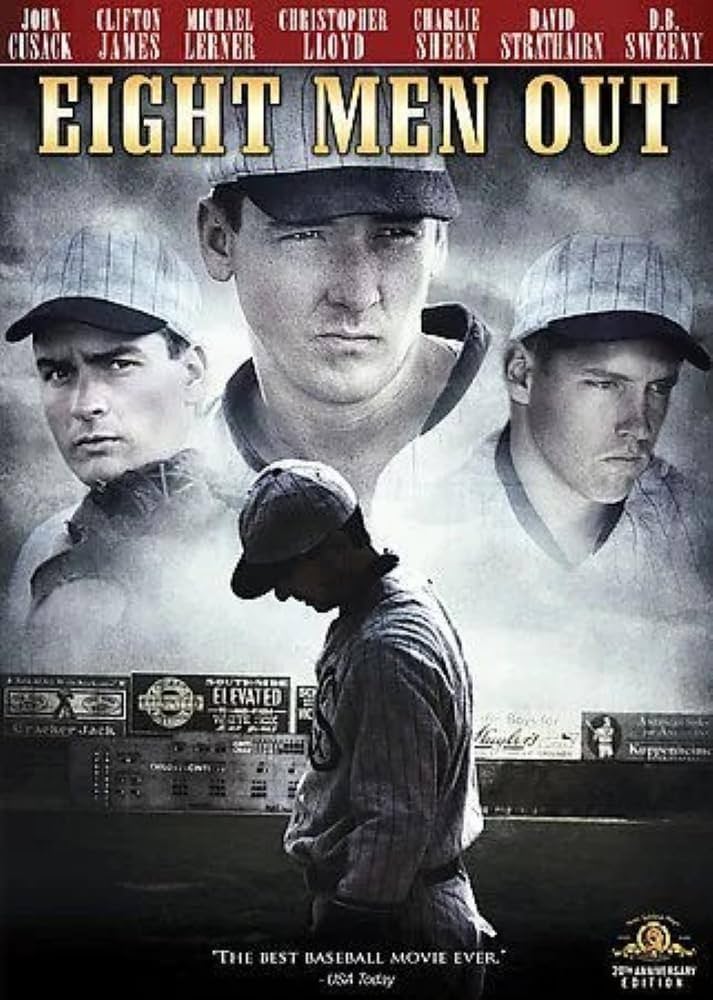
The relevance to your life as a recreational bettor is more direct than you think. Every time a player gets investigated for unusual prop activity, every time a referee gets quietly reassigned, every time a "sharp money" alert moves a line off-market for no obvious reason, the ghost of the 1919 Series is walking through the room. The NBA's Jontay Porter situation. The MLB interpreter scandal. The college basketball player prop investigations that surfaced in 2024 and 2025. All of it traces back to Eight Men Out and the lesson the industry learned: when betting is unregulated, athletes are cheap to buy. When it is regulated, the betting data itself becomes the smoke that finds the fire.
If you bet player props on bottom-of-the-bench guys with weirdly specific lines, this movie should be required viewing twice.
5. Casino (1995)
Scorsese's three-hour Vegas opera is technically a casino movie, not a sports betting movie, but it earns its place because Robert De Niro's Sam "Ace" Rothstein is based on Frank "Lefty" Rosenthal, one of the sharpest oddsmakers who ever lived. The character is a gambler the way a bond trader is a gambler: he has done the math, he knows his edge, and he is appalled by the people around him who treat money like it grows back.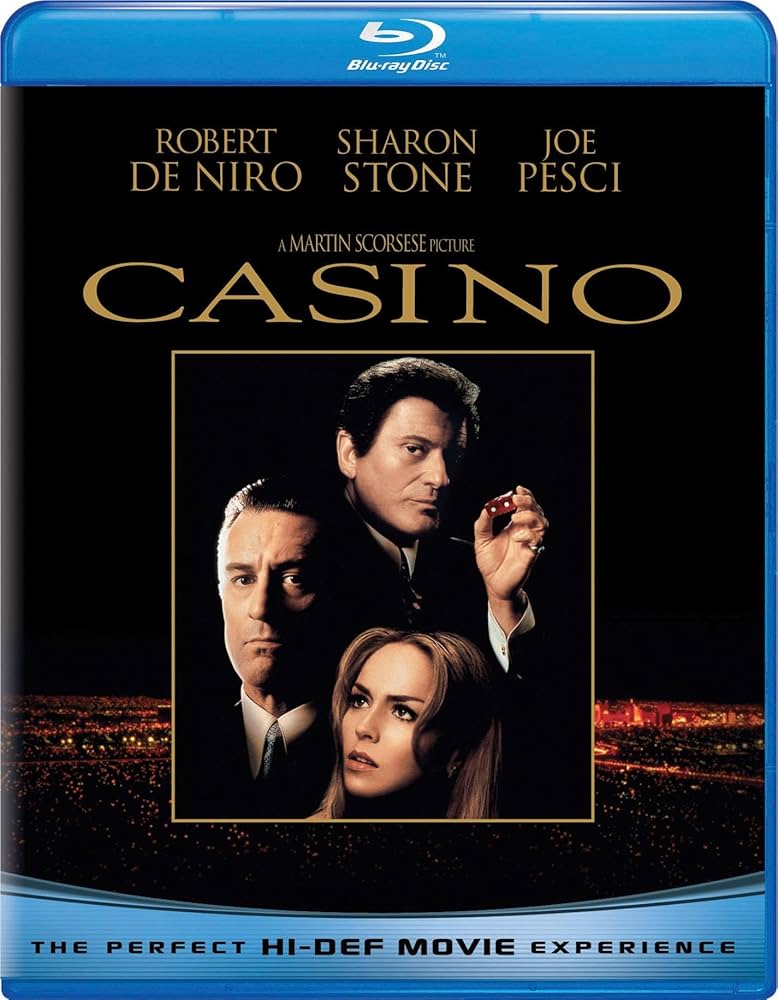
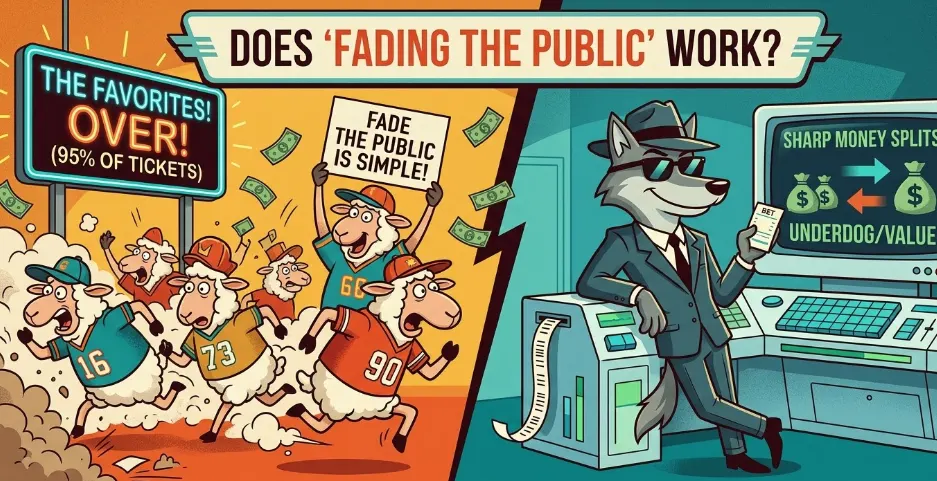
The opening twenty minutes of Casino is essentially a documentary on how Vegas sportsbooks actually operate, dressed in better suits. The hand-counting of cash, the comp ladder, the way information about line movement was treated like state secrets. Most of that infrastructure is gone now, replaced by software, but the principles remain. Sharps still beat the market by being right faster than the book can adjust. Squares still bet favorites and overs because favorites and overs feel correct.
If you only watch one scene, watch the part where Ace explains why the casino always wins in the long run. It is not because the games are rigged. It is because variance always reverts and the house has more money than you to wait it out. That is also the entire reason your buddy who went 8-3 last week is going 4-11 this week and blaming the refs.
6. White Men Can't Jump (1992)
Ron Shelton's basketball comedy with Wesley Snipes and Woody Harrelson is, quietly, one of the most useful movies on this list for actual bettors. Why? Because it is about hustling, and hustling is just sports betting with extra steps.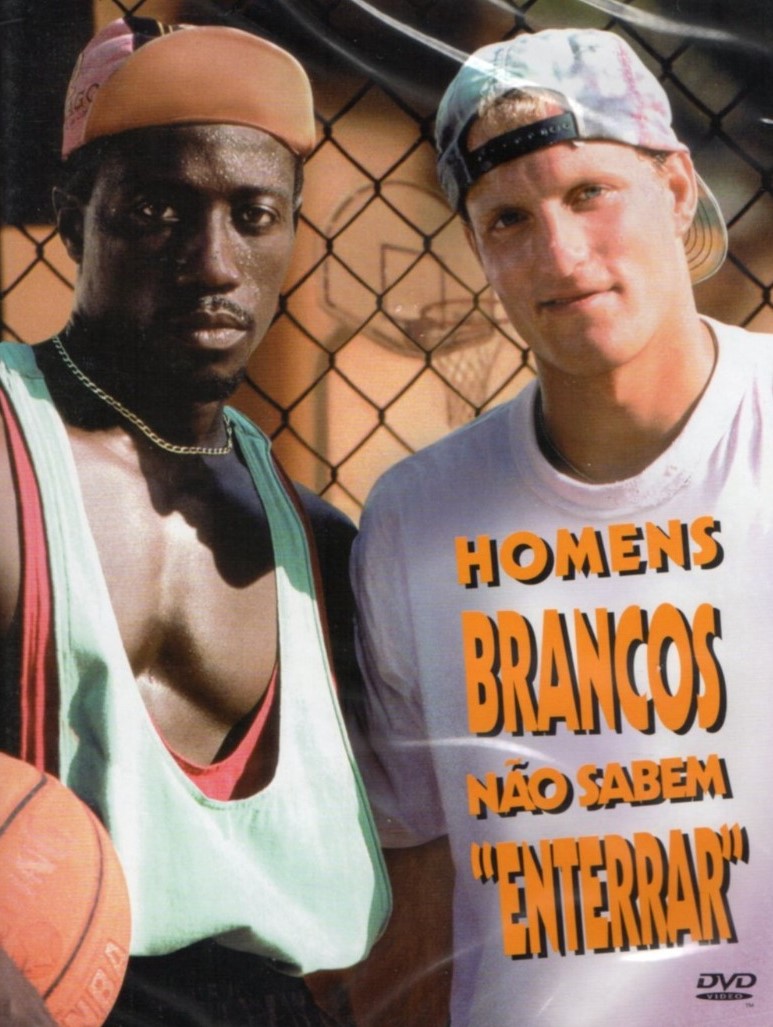
The whole film is built on the gap between perceived ability and actual ability. Harrelson's character looks like a clueless suburban hack. He is, in fact, a knockdown shooter. Snipes looks like every streetball legend you have ever met. He is also extremely good. The bets they win are not won at the moment of the shot. They are won at the moment they convince the opponent of a wrong prior.
This is the same edge that beats sportsbooks, by the way. The market price on any line is the consensus opinion. You make money when the consensus is wrong. That happens most often in spots where public perception lags reality: a quarterback who looks washed but is actually banged up and getting healthy, a team whose record looks ugly but whose underlying numbers are strong, a player coming off a bad stretch whose underlying shooting percentages have not collapsed. Find the gap between perception and reality. That is the whole game.
Also, the chemistry between Snipes and Harrelson is unmatched. Just a fantastic movie even if you ignore every word above.
7. Lay the Favorite (2012)
A film almost nobody saw, based on Beth Raymer's memoir about going from cocktail-waitress aspirant to professional sports bettor under the wing of a Vegas wiseguy named Dink (Bruce Willis, charming for the last time on screen).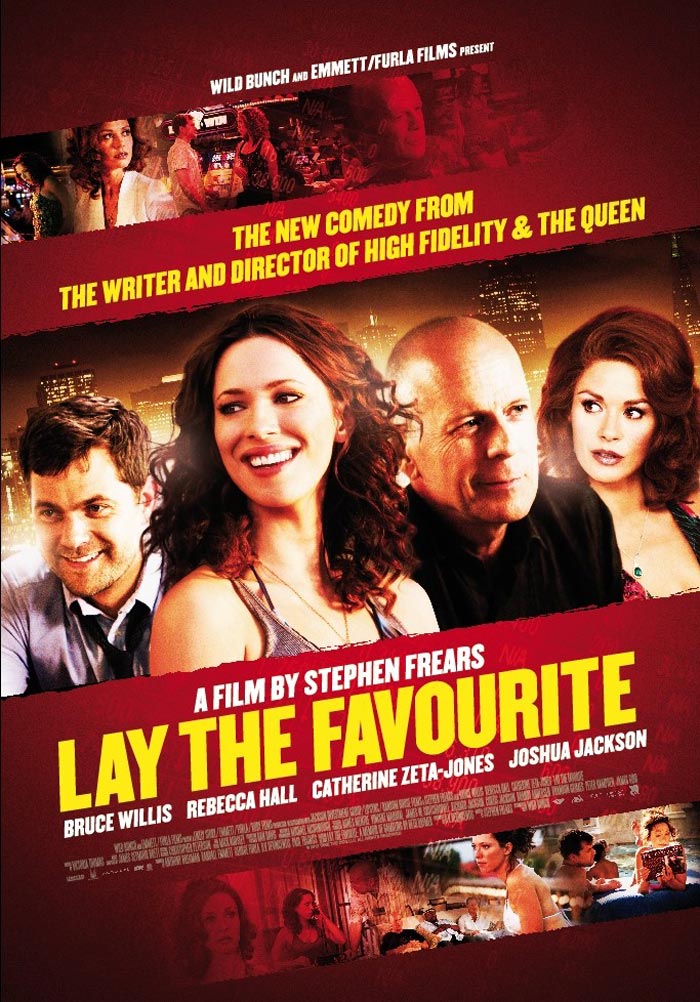
The movie itself is uneven. The book is great. What both get right is that being a sharp is mostly clerical. The actual job is finding line discrepancies between books, executing trades fast enough to lock in the difference, and managing a bankroll without doing anything stupid emotionally. There are no smoke-filled rooms. There are no last-minute hunches. There are spreadsheets and a lot of phone calls.
If your sports betting fantasy involves walking up to a counter, slapping down ten thousand in cash, and watching the game from a leather chair while a mistress brings you whiskey, this is the movie that will gently inform you the actual job is closer to running a small accounting firm.
8. Silver Linings Playbook (2012)
Not a sports betting movie at first glance. It is a romantic comedy about mental health. But Robert De Niro's character, Pat Sr., is one of the most accurate portrayals of an emotional bettor in any film. He has a system. The system is not statistical. The system is that the Eagles win when the family arrangements are correct. He believes this with religious intensity. He bets accordingly. He loses money.
This is roughly 70 percent of all recreational bettors. The "system" is rituals, jersey-wearing, parlay superstitions, that one bar that always brings luck. The market does not care about your rituals. The market is priced on the assumption that everyone has rituals and that the rituals cancel each other out into noise.
If you can watch Pat Sr. parlay a Cowboys game with his son's emotional reconciliation and not see yourself, you are either lying or you do not bet enough to count.
9. Diggstown (1992)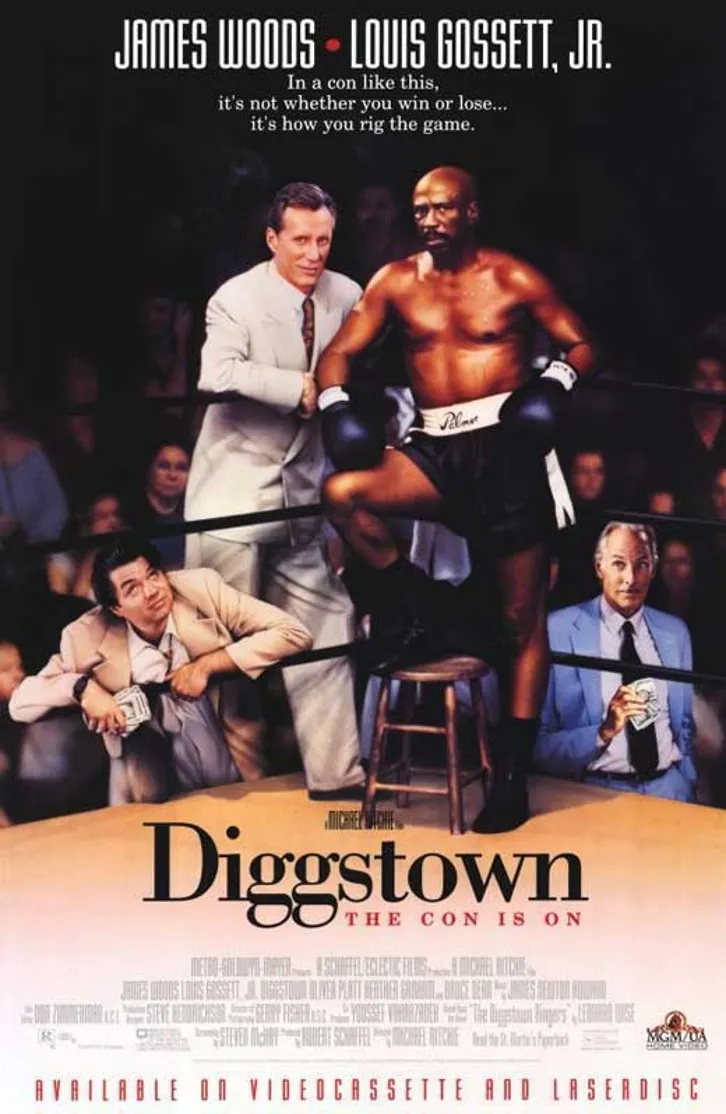
Boxing con-job comedy. James Woods runs a hustle on a small town's wealthiest sports bettor by claiming his guy can knock out ten local fighters in one day. Sportsbook drama plays out. Side bets multiply. The whole town is essentially running an unregulated prop market.
Diggstown is on this list because it is the most entertaining movie ever made about how line movement gets exploited. Every adjustment to the bet, every escalation, every counter-bet is the kind of thing that happens on real sportsbooks every weekend in slower motion and without the punching. Worth watching as a comedy and as a primer on how lines actually move when sharp money meets dumb money.
10. The Gambler (1974, with the 2014 remake an honorable mention)
James Caan as a literature professor with a six-figure debt and a complete inability to walk away from a table. The 2014 remake with Mark Wahlberg is glossier and worse. The original is one of the best films ever made about the specific psychological loop of chasing losses.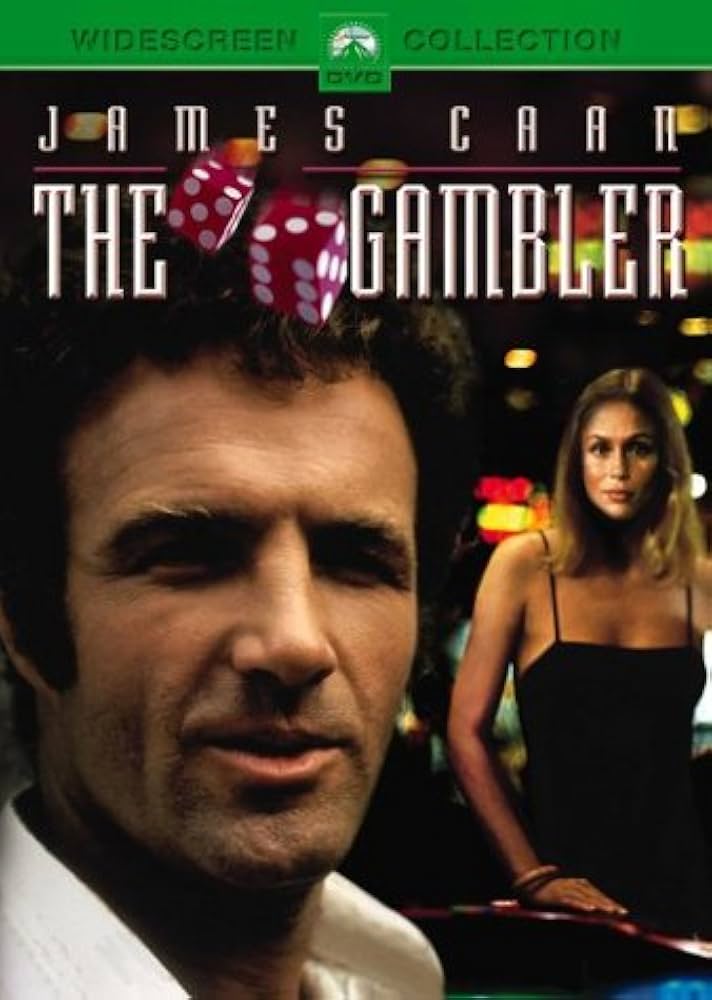
Caan's character is not stupid. He is a Dostoevsky scholar. He understands probability theory better than the people he owes. None of it matters. The compulsion to keep playing is a separate operating system that overrides every piece of information his frontal cortex provides. This is the cleanest depiction in cinema of the difference between the math of gambling and the experience of gambling.
For recreational bettors who occasionally feel the pull to chase a Sunday morning loss into Sunday night Korean baseball, watch this once a year as a kind of immune-system booster.
What These Films Get Right About Recreational Betting
Strip away the suits and the smoke and the swelling soundtracks, and the best sports betting movies are all about the same three things: bankroll management, expectation control, and the inability of human beings to do either consistently. Howard Ratner does not lose because he is unlucky. He loses because every dollar he has is in play every minute of every day. Eddie Felson does not lose to Minnesota Fats because Fats is better. He loses because he does not know when to leave. Pat Sr. does not lose because the Eagles are bad. He loses because he is betting the Eagles for reasons that have nothing to do with the Eagles.
The recreational bettor who watches these films and takes the right notes can save themselves a lot of money. Set unit sizes that survive a six-game losing streak without forcing you to redeposit. Avoid parlays unless you genuinely understand they are entertainment and not value. Treat correlated props with the suspicion they deserve. Walk away from a session when the session has decided to walk away from you.
And if you ever, ever find yourself flying a girlfriend by helicopter to a casino with a sportsbook in another state to place a three-leg parlay on a game that starts in forty minutes, please, for the love of God, just bet the moneyline on its own.
Honorable Mentions for the Curious
Moneyball (2011) is not a betting movie but it is the best film ever made about the kind of statistical thinking that beats a sportsbook. Watch it twice. The Big Short (2015) is technically about mortgage derivatives but the bet construction logic is identical to what sharp bettors do. Bookies (2003) is a competent low-budget thriller about being on the wrong side of the counter. Owning Mahowny (2003) with Philip Seymour Hoffman is brutal and great.
If you want documentaries instead of fiction, Action Bronson's gambling segments aside, look up "Life on the Line" for actual professional bettors talking about the actual job.
The movies above will not make you a better bettor. Reading the books behind them might. But at minimum, watching them with the right framing will help you spot the version of yourself that is about to do something stupid before you actually do it. Which, in this game, is half the battle.