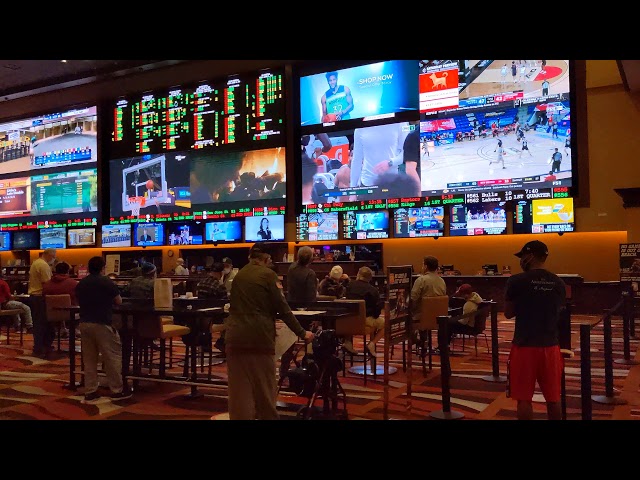
Texas has the Cowboys. The Longhorns. The Astros. The Spurs. The Mavericks. Seven major professional sports franchises, seven powerhouse college programs, and roughly 30 million people who care deeply about the outcomes of all of them.
Check out our expertly selected list of online bookmakers open to players in Texas:






What Texas does not have is a single legal online sportsbook. Not one. The second most populated state in the country, home to arguably the most sports-obsessed fanbase on earth, cannot offer its residents a regulated way to put $20 on the Cowboys to cover a spread. And the reasons for that have less to do with public opinion and more to do with backroom politics, out-of-state casino money, and one man in particular who keeps pulling the emergency brake.
If you have searched for "Texas online bookmakers" hoping to find a list of licensed sportsbook apps ready for download, this is where you recalibrate. There are no state-regulated options. But there is a genuinely fascinating story about why, what alternatives actually exist, and when (or whether) that changes.
The Political Blockade: One Man Against 30 Million Sports Fans
To understand why Texas has no legal online bookmakers, you need to understand the state's unique legislative structure and the singular figure standing in the way.
Texas Lt. Governor Dan Patrick has been the most effective opponent of sports betting legalization in the country. Not because he has mounted some grand constitutional argument. Not because he has rallied massive public opposition. He has simply refused to let bills reach the Senate floor.
In 2023, the Texas House passed House Joint Resolution 102 with 101 out of 143 votes. That represented enormous bipartisan support. The Texas Sports Betting Alliance, a coalition of 11 professional sports teams including the Dallas Cowboys and Houston Astros, had lobbied aggressively. They believed they had the 21 Senate votes needed to meet the two-thirds threshold for a constitutional amendment. The night after the House vote, Patrick told the alliance the votes were not there and refused to refer the bill to committee. The bill died without a single senator casting a vote.
Charlotte Jones, the Cowboys' chief brand officer, later said publicly that the organization believed it had Patrick's support heading into that vote.
The same pattern repeated in 2025. Multiple bills were introduced, including HJR 134 and SJR 65. A dozen newly elected House GOP members signed a letter opposing any expansion of gambling before the session even began. Nothing reached the floor of either chamber.
Because the Texas legislature only convenes in odd-numbered years, the next opportunity for sports betting legislation is 2027. Patrick is not up for re-election until after that session, meaning the political math does not change until at least 2029.
For bettors in Texas, this is the reality: the state that invented Texas Hold'em cannot figure out how to legalize a mobile parlay.
Follow the Money: Who Benefits from Keeping Texas Dark
The political resistance is not entirely ideological. There is a significant financial incentive for certain parties to keep gambling illegal in Texas.
The Chickasaw Nation operates WinStar World Casino in Thackerville, Oklahoma, roughly 75 miles north of Dallas on Interstate 35. It is the largest casino in the world by gaming floor area, covering over 600,000 square feet. Its primary customer base is the Dallas-Fort Worth metroplex.
At a gaming industry conference in 2025, Chickasaw Nation Gaming Commission vice chair Crystal Houston was remarkably candid about the tribe's strategy. She stated plainly that the goal is to keep all forms of gaming out of Texas because that is what drives their revenue.
The Chickasaw Nation has donated more than $15 million to political interests over the years, many of them in Texas. They also own Lone Star Park, a horse racing facility in Grand Prairie. The Choctaw Nation operates another massive casino complex just 55 miles from WinStar, also targeting the DFW market.
Oklahoma tribal casinos are not the only outside interests with skin in this game. The entire border region benefits from Texas bettors who cannot bet at home. Louisiana, Arkansas, and New Mexico all have some form of legal sports wagering. Every one of those states absorbs Texas dollars.
An Oklahoma state legislator once openly stated he was pushing for sports betting in his state specifically to "take money from Texans." That is not an insult. That is a business plan.
The Numbers That Make Texas the White Whale
Every major sportsbook operator in America is watching Texas like a hawk. The numbers explain why.
A 2024 study by Eilers & Krejcik Gaming, commissioned by the Texas Sports Betting Alliance, projected a mature annual handle of $32.1 billion. That is a 43% increase over their 2023 projection, driven by accelerating growth in comparable markets like New Jersey, Arizona, and Ohio. For context, New York, the current king of regulated sports betting, handles roughly $10 billion annually. Texas has 57% more residents than New York.
The same study estimated that a regulated Texas market would generate more than $360 million in annual tax revenue. A separate Tax Foundation analysis projected approximately $326 million annually at a 10% gross gaming revenue tax rate.
Meanwhile, the American Gaming Association estimated in 2022 that Texans were already wagering roughly $6 billion per year on unregulated sports betting. By every credible estimate, that number has grown since.
GeoComply, the geolocation technology company used by virtually every regulated sportsbook in America, tracked over 1.48 million attempts by Texas residents to access legal sportsbooks in other states during November 2024 alone. That was an 87% increase over November 2023. Those are people opening DraftKings or FanDuel, getting blocked by geofencing software, and presumably doing one of two things: driving to Louisiana or finding an offshore book.
Neither outcome puts a dime in Texas state coffers.
What Texans Can Actually Do Right Now
If you are sitting in Houston or San Antonio or Austin right now wanting to put action on a game, your legal options are limited but not nonexistent.
Daily Fantasy Sports (DFS) remain the closest legal analog to traditional sports betting in Texas. Platforms like DraftKings Pick6, FanDuel, Underdog Fantasy, and ParlayPlay operate in the state for residents 18 and older. These apps let you make "more or less" predictions on player stat lines for real money. If you have ever wanted to bet that Patrick Mahomes goes over 275.5 passing yards without technically betting on the Chiefs game, this is your loophole. The platforms are carefully structured to meet the legal definition of fantasy sports rather than sports wagering.
Prediction Markets like Kalshi operate under federal regulation by the Commodity Futures Trading Commission and are accessible in all 50 states, including Texas. You can buy "yes" or "no" contracts on sports outcomes, essentially functioning like a binary options market for games. Lt. Governor Patrick has noticed: in March 2026, he directed a Senate committee to study prediction markets and whether they constitute gambling under Texas law. So enjoy them while they last.
Social Sportsbooks like Fliff operate under Texas sweepstakes laws, allowing users to earn in-game currency that can be redeemed for cash prizes. You predict game winners, point totals, and player props, but the currency mechanic creates a legal distinction from traditional wagering.
Horse Racing is legal at licensed tracks like Lone Star Park and Retama Park. After a brief period where TwinSpires reopened online horse racing wagering to Texas residents in early 2026, the Texas Racing Commission issued a cease-and-desist order within a week. Even the one form of online betting the state had grudgingly tolerated got shut down almost immediately.
None of these options replicate the full experience of a regulated sportsbook with live betting, same-game parlays, and deep market selection. They are workarounds, not solutions. But they are legal, and that distinction matters.
The Offshore Question Nobody Wants to Answer Honestly
Here is the uncomfortable truth that most "Texas sports betting" articles dance around: hundreds of thousands of Texans are betting with offshore sportsbooks right now.
These are sites operating from jurisdictions like Curacao, Costa Rica, or Antigua. They accept U.S. customers, process deposits through cryptocurrency, and offer the full range of sports betting markets that regulated books provide. Some of them have operated for decades. Some of them are new and unreliable.
Texas law is unambiguous. Placing a bet on the partial or final result of a game or contest is a criminal offense under Chapter 47 of the Texas Penal Code. Whether the state has the inclination or resources to prosecute individual bettors using offshore sites is another question entirely, and historically, enforcement has focused on operators, not players.
The real risk with offshore bookmakers is not legal but practical. There is no U.S. jurisdiction licensing these operations, which means there is no regulatory body ensuring they pay winning bets, protect customer funds, or operate fair markets. Some offshore books have closed overnight without returning player balances. There is no consumer protection hotline to call when an unregulated sportsbook in the Caribbean decides your $5,000 withdrawal is taking 90 business days.
This is the part of the Texas betting equation that never makes it into the political debate. The choice is not between gambling and no gambling. Texans are already gambling. The choice is between regulated gambling that generates tax revenue and protects consumers, and unregulated gambling that does neither.
The 2027 Session: Realistic Expectations
Every article about Texas online bookmakers ends with some version of "2027 could be the year." Here is a more honest assessment.
The 2027 legislative session is the next possible window. Any legalization of sports betting in Texas requires a constitutional amendment, which means both chambers of the legislature must approve it before it goes to a statewide voter referendum. Polling consistently shows that over 60% of Texans support legalized sports betting. The demand side is not the problem.
The problem remains the Senate. Patrick will still be presiding. His term does not expire until 2031 (he announced he is seeking another four-year term in September 2025). Unless his position shifts, and there is zero public evidence it will, the Senate remains the graveyard for betting legislation.
The wildcard is casino legislation. Miriam Adelson, the billionaire behind Las Vegas Sands and now the majority owner of the Dallas Mavericks, has spent more than $13 million on political action committees supporting casino legalization in Texas. The Chickasaw and Choctaw nations have both signaled they would support casino resorts in Texas if structured favorably. A combined casino-and-sportsbook bill could theoretically unlock different political dynamics than a standalone sports betting measure.
But "theoretically" is doing a lot of work in that sentence.
The most realistic timeline for Texas online bookmakers is probably 2029 or later: a 2027 session that at least advances legislation meaningfully, followed by either a special session or the 2029 regular session that gets a constitutional amendment on the ballot, followed by a voter referendum, followed by a regulatory buildout and licensing process that takes another 12 to 18 months.
If you are a Texas sports bettor planning your life around regulated online bookmakers, plan for the long haul.
What a Regulated Texas Market Would Actually Look Like
The 2023 House bill (HB 1942) provides the best blueprint for what Texas sports betting could eventually become. That bill proposed mobile sports betting with up to 15 operator licenses, a 10% tax rate on gross gaming revenue, and a $500,000 licensing fee. Professional sports franchises and racetracks would have been eligible to apply for licenses, essentially making Jerry Jones and the Cowboys not just a team you bet on but a sportsbook you bet with.
If that model or something similar eventually passes, Texas would likely launch as a mobile-first market similar to what has succeeded in New York, New Jersey, and Ohio. The population density of the DFW, Houston, Austin, and San Antonio metros makes mobile betting far more practical than building retail sportsbook locations.
For recreational bettors, the likely experience would look familiar to anyone who has used a legal sportsbook app in another state. Download the app. Verify your identity. Deposit funds. Browse thousands of markets. Place bets. Cash out winnings. The same basic experience that roughly 150 million Americans in 39 other states already have access to.
Texas would also be a massive market for live betting and player props, given the state's deep engagement with both NFL and college football. College sports betting restrictions could play a significant role: the Eilers & Krejcik study estimated that banning college prop bets alone would reduce the state's overall handle by nearly 25%.
What Did We Learn?
Texas online bookmakers do not exist in any regulated, state-licensed form as of 2026. The state's political structure, the influence of out-of-state casino interests, and the singular stubbornness of Lt. Governor Dan Patrick have combined to create the largest unregulated sports betting market in the country.
What exists instead is a patchwork of DFS apps, prediction markets, and social sportsbooks that offer real-money action within carefully defined legal boundaries. Beyond that, an enormous offshore market operates in plain sight, serving demand that the state has chosen not to regulate.
The money is already being bet. Over a billion attempts to access legal sportsbooks. Billions wagered illegally each year. Hundreds of millions in potential tax revenue evaporating across state lines and international borders. The question was never whether Texans want to bet on sports. The question is how much longer the state's political class can justify pretending they do not.