Let’s be honest: there is nothing nothing more soul-crushing than hitting a brilliant 3-leg parlay, doubling your Bitcoin stack, and then waking up the next morning to find out the market crashed 15% overnight. You won the battle, but the charts won the war.
Welcome to USDT (Tether) sports betting.
If Bitcoin is the wild, unpredictable rockstar of the crypto world, USDT is the boring accountant who makes sure you actually get paid what you’re owed. For sports bettors, "boring" is beautiful. This guide will walk you through why stablecoin gambling is the sharper play, how to avoid getting eaten alive by network fees, and where to actually place your bets.
Below is our curated list of trusted online bookmakers that support USDT (Tether) deposits and withdrawals. Each site has been independently vetted and reviewed by our experts:



Why USDT? The "Stable Sniper" Advantage
You are here because you want to bet on sports, not on the price of the currency you're holding.
USDT is a stablecoin, pegged 1:1 to the US Dollar. When you deposit $500 worth of USDT, it stays $500. It doesn’t matter if Elon Musk tweets about a dog or if the SEC sues a random exchange; your bankroll remains locked in value.
The Volatility Trap
Imagine you bet 0.01 BTC on the Chiefs to win the Super Bowl. They win! But while the game was on, Bitcoin dropped from $60k to $55k. You still have more Sats, but your purchasing power took a hit.
With tether sportsbooks, you eliminate that second layer of gambling. You are wagering on the game, not the macro-economy. This makes bankroll management actually possible. You can calculate ROI without needing a graphing calculator and a bottle of aspirin.
The Network Guide: TRC20 vs. ERC20 (Read This or Lose Money)
This is the most critical technical detail you need to understand. If you gloss over this, you will light money on fire.
USDT doesn’t have its own blockchain; it piggybacks on others. When you go to deposit or withdraw, you will be asked to choose a Network. The two main contenders are the Ethereum Network (ERC20) and the Tron Network (TRC20).
1. ERC20 (Ethereum Network)
-
The Vibe: An armored truck stuck in downtown traffic.
-
The Cost: High. Painfully high. Gas fees can range from $5 to $20+ depending on network congestion.
-
The Speed: Slower (minutes to hours if the network is clogged).
-
Verdict: Avoid for betting unless you are moving tens of thousands of dollars and value Ethereum’s security architecture over your own wallet’s well-being.
2. TRC20 (Tron Network)
-
The Vibe: A bullet train.
-
The Cost: Dirt cheap. Usually under $1.
-
The Speed: Near instant.
-
Verdict: The King of Betting. almost every serious crypto bettor uses TRC20. When a bookie gives you a deposit address, always check if they support TRC20. It saves you money on every single transaction.
Pro Tip: Never send TRC20 USDT to an ERC20 address (or vice versa). The funds will vanish into the void, and customer support will just send you a sad emoji.
How to Start: A 3-Step Quickstart
-
Get a Wallet: Do not deposit directly from an exchange (like Coinbase or Kraken) to a sportsbook. Exchanges hate gambling sites and might freeze your account. Get a personal wallet like Exodus or Trust Wallet.
-
Buy & Swap: Buy USDT on an exchange. If you can, buy it directly on the Tron network. If not, swap it inside your wallet.
-
Deposit via TRC20: Go to your sportsbook, hit Deposit, select USDT, and choose the TRC20 network. Copy that address, paste it into your wallet, and send. It should arrive before you can finish reading this sentence.
Betting is hard enough without worrying about the price of Bitcoin crashing because a country banned mining again. Switch to USDT. Use the Tron network to save on fees. Keep your bankroll stable so the only sweat you have is in the 4th quarter, not on CoinGecko.
The Origin Story: The Digital Dollar's "Shady" Godfather
To understand USDT, you have to understand its origin story, which reads like a tech-noir thriller. Launched in 2014 as Realcoin before rebranding to Tether, it was the brainchild of Brock Pierce (the former child actor from The Mighty Ducks) and Reeve Collins.
The mission was simple: create a "bridge" between the legacy banking system and the lawless frontier of crypto. For years, Tether was the only way to move "dollars" around without actually dealing with a bank... which is why it became the lifeblood of the industry. However, it hasn't been without drama. For a long time, the running joke in crypto was, "Is Tether actually backed by anything, or is it just a printer in a basement?" After a few high-profile settlements with the NY Attorney General and a massive shift toward US Treasury Bills, Tether has largely silenced the "trillion-dollar collapse" doomers. In 2026, it remains the undisputed king of liquidity with a market cap north of $180 billion. It’s the house currency of the internet.
The Risks: What Could Go Wrong?
Since we’re being peers here: "stable" doesn't mean "risk-free." If Bitcoin is a rollercoaster, USDT is a ferry—usually safe, but you still need to know where the life jackets are.
-
The De-Peg Scares: Occasionally, during absolute market meltdowns (think 2022 or the minor tremors of 2024), USDT has briefly dipped to $0.98 or $0.97. It usually snaps back within hours as arbitrageurs swoop in, but it’s a reminder that nothing is guaranteed.
-
The "Freeze" Button: Unlike Bitcoin, USDT is centralized. Tether Limited has a "blacklist" function. If you accidentally send funds to a wallet linked to a sanctioned entity or a North Korean hacking group, Tether can (and will) freeze those tokens into digital paperweights.
-
The Audit Gap: While they now provide "attestations" from reputable firms like BDO, they still don't do full-blown, traditional audits. Most of the market has accepted this, but the skeptics are always lurking in the shadows.
The Political Climate: The Suit-and-Tie Invasion
As of 2026, the wild west has been paved over with a few highways. Governments have finally realized they can’t ban stablecoins, so they’re trying to tax and regulate them into submission.
In the EU, the MiCA (Markets in Crypto-Assets) regulations have forced exchanges to be very picky about which stablecoins they list. In the US, the GENIUS Act and similar frameworks are pushing for stablecoins to be treated more like "digital cash" and less like unregulated securities.
For you, the bettor, this is actually good news. It means your USDT is less likely to vanish in a puff of fraud, but it also means the days of "total anonymity" are fading. Most reputable sportsbooks will eventually ask you who you are.... just keep your documents ready and your VPNs updated.
A Tale of Two Bettors
To wrap this up, let me tell you about Degenerate Dave and Stable Sam.
Last November, Dave and Sam both hit a +800 parlay on a Saturday night. Dave got paid in Bitcoin; Sam got paid in USDT.
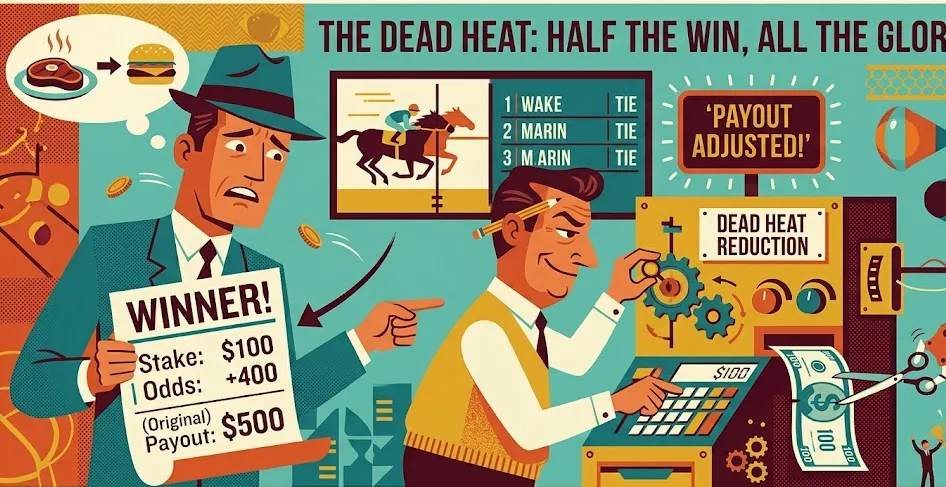
Dave spent the rest of his Saturday night staring at the 1-minute candle charts on his phone, unable to sleep because some whale in Singapore decided to dump 5,000 BTC. By Sunday morning, Dave's winnings had "evaporated" by 12%. He ended up ordering a sad, budget pizza.
Sam? Sam took his USDT, saw that $1.00 was still $1.00, and went to sleep like a baby. He woke up, withdrew his winnings for a $0.80 fee on the Tron network, and took his girlfriend to a steakhouse.
Be like Sam. The game on the field is enough of a gamble... you don't need to bet on the currency, too.