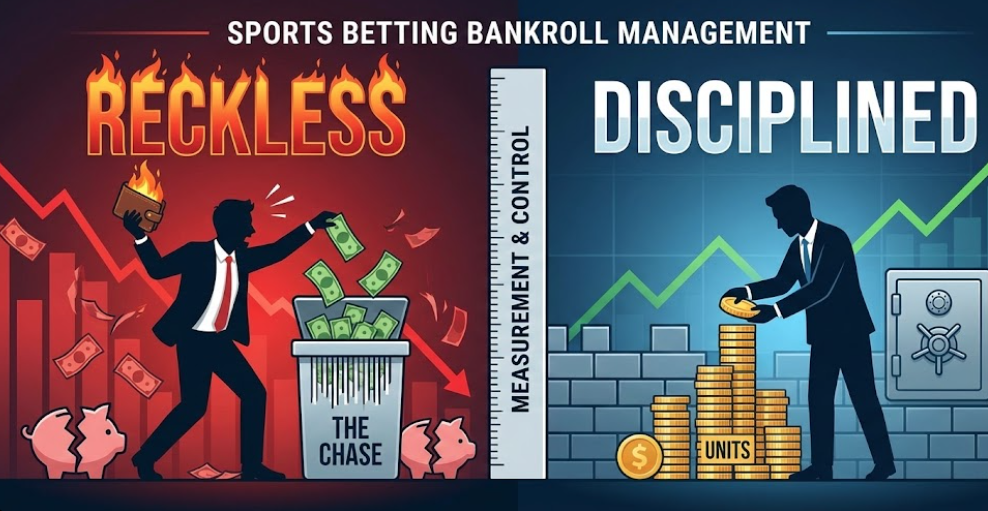
You just hit a three-team parlay. You feel invincible. The next night, you double your bet size because you are "playing with house money." Two hours later, the house has its money back, plus a chunk of yours.
Welcome to the lifecycle of the average sports bettor.
Most punters think losing is about picking the wrong teams. It isn't. You can pick winners at a 55% clip—a rate that would make you a legend in Vegas—and still go broke if your money management is trash. Bankroll management is the unsexy, boring, spreadsheet-filled side of betting that separates the professionals from the guys asking to borrow twenty bucks until payday.
Here is how to build a fortress around your funds.
Rule #1: The "Life Money" Firewall
First, let’s get the golden rule out of the way. Your betting bankroll is not your checking account. It is not your savings. It is definitely not your rent money.
Treat your bankroll like a startup cost for a small business. If you have $1,000 you are willing to light on fire, that is your bankroll. If you lose it, the shop is closed. You don't dip into the grocery fund to keep the lights on. If you are constantly reloading your account from your paycheck, you don't have a bankroll; you have a gambling habit.
The Magic of the "Unit"
Stop saying "I put $50 on the Chiefs." Start saying "I put one unit on the Chiefs."
A Unit is simply a standard measure of your bet size, usually expressed as a percentage of your total bankroll.
-
Conservative: 1% per bet. (Recommended for beginners who want to survive).
-
Standard: 2-3% per bet. (For the bettor who wants some action but hates going broke).
-
Aggressive: 4-5% per bet. (You enjoy volatility and probably have high blood pressure).
If your bankroll is $1,000, your unit is $10 to $30. If you love a play, maybe you bet 2 units. If it's a "lock of the century" (it never is), maybe you bet 3 units. But you never, ever bet 20 units because you "have a feeling."
Flat Betting vs. The Kelly Criterion
Now, let's talk strategy. How much should you actually bet?
1. Flat Betting (The Shield) This is the vanilla ice cream of betting strategies. It is boring, and it works. You bet the exact same amount on every single game.
-
Pros: You can survive a massive losing streak. If you bet 2% per game, you have to lose 50 bets in a row to go bust.
-
Cons: It’s hard to grow your bankroll quickly when you are on a heater.
2. The Kelly Criterion (The Sword) This is for the math nerds. The Kelly Criterion is a formula that calculates the exact amount you should bet based on your edge.
-
The Formula: (Decimal Odds - 1) * (Probability of Winning) - (Probability of Losing) / (Decimal Odds - 1).
-
The Trap: Kelly assumes you know the exact probability of winning. You don't. You are guessing. If you overestimate your edge, Kelly will tell you to bet huge amounts, and you will go broke fast.
-
The Compromise: Use "Quarter Kelly." Calculate the Kelly amount, then bet 25% of that. It captures the upside of compound growth without the risk of ruin.
The "Chasing" Death Spiral
The psychological killer of bankrolls is "The Chase." It’s Sunday night. You are down 5 units for the day. The late game is Hawaii vs. San Jose State. You don't know who the quarterback is. You can't name three players on the field. But you bet 5 units on the over just to "get back to even."
This is how bankrolls die.
Smart Play: Accept the red days. In sports betting, you will lose about 45-48% of the time if you are good. A losing day isn't a failure; it's a statistical certainty. Eat the loss, close the app, and come back tomorrow with your standard unit size.
What Did We Learn?
Bankroll management isn't about getting rich quick. It's about staying in the game long enough to get lucky.
-
Segregate Your Funds: Betting money is separate from life money.
-
Respect the Unit: 1-3% of your bankroll. No exceptions.
-
Don't Chase: The Hawaii game won't save you.
-
Track Everything: You can't manage what you don't measure. Use a spreadsheet.
If you can master your money, picking winners becomes the easy part. If you can't, it doesn't matter who you pick... the house will eventually get it all back.