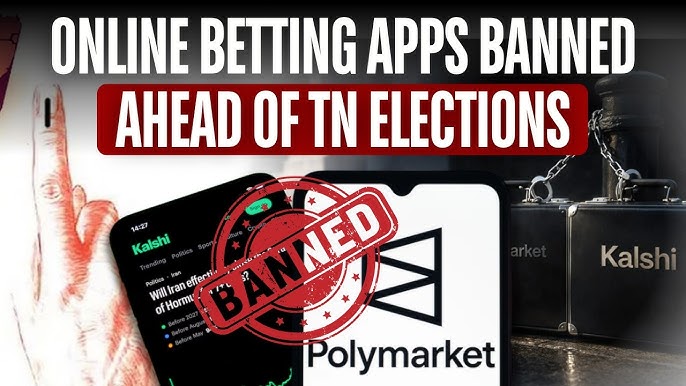
If you live in Nevada, you spent part of August discovering that Kalshi, the app that marketed itself as "the first app for legal sports betting in all 50 states," is in fact not available in one of them. The irony is thick enough to stand a spoon in, and it got worse: a federal appeals court then quoted that exact line back at the company as evidence it was running a sportsbook.
Below is our list of trustworthy Kalshi and Polymarket alternative sites for betting:





Here is what actually happened, what it costs you, and what the honest alternatives are.
The Nevada sequence, briefly
Nevada filed a civil enforcement action against Kalshi in February 2026. In May a court ordered it to stop offering covered event contracts to Nevada residents. Kalshi agreed to geofence by August 12, 2026 under threat of $120,000 a day in penalties.
On August 15, Nevada moved for contempt, saying investigators kept getting through anyway. The state's filing noted Kalshi had spent roughly $190,000 building geolocation in house, which regulators described as "rudimentary compared to the third-party systems used by licensed sportsbooks." Kalshi called the contempt motion a PR stunt.
Then on August 28 the Ninth Circuit affirmed. The panel held that sports event contracts are likely not "swaps" under the Commodity Exchange Act, which means the federal regulator's exclusive jurisdiction never attaches, which means Nevada is free to treat them as gambling. Nevada's Gaming Control Board chairman did not hide his satisfaction:
"This completely vindicates what we have been saying all along. This is sports betting and needs to be properly regulated by the state."
Two federal courts, opposite answers, same question
On April 6, 2026, the Third Circuit decided a New Jersey case the other way, holding that sports event contracts are swaps and that states cannot prohibit them. On August 28, the Ninth Circuit held they likely are not.
That is a clean split on a single statutory question, which is roughly the loudest signal available that the Supreme Court needs to sort it out. New Jersey's attorney general filed a 332 page certiorari petition on September 3, 2026. The question presented is whether Dodd-Frank, an act written in response to the 2008 housing crash, quietly stripped states of authority over sports wagers traded on federally registered markets. The petition's best line: "Congress did not silently make the sports-betting industry immune from state law."
A federal judge in Utah made a similar point more colourfully on August 5, 2026, in the first final merits judgment against Kalshi anywhere, writing that it is "implausible that Congress would silently reverse course through an Act addressing the 2008 housing financial crisis."
So the honest status in September 2026 is: nobody knows, and your access depends on which federal circuit your state happens to sit in.
Where the lights are out
Sports contracts from Kalshi, Polymarket or both are blocked or heavily restricted in Nevada, Washington, Michigan, Utah, Massachusetts and Ohio. Ohio fined Kalshi five million dollars in April 2026, and its attorney general offered the quote of the year on the subject: "I wouldn't bet on how long Kalshi will be operating in Ohio."
Actively contested, markets still running for now: New Jersey, Arizona, Maryland, Connecticut, Illinois, Rhode Island, Tennessee, Wisconsin, Minnesota, California and Texas. New York sued for thirty-six billion dollars in July 2026, a number comfortably larger than Kalshi's own twenty-two billion dollar valuation, which tells you something about how these negotiations are going.
Brokerage access has its own map. Maryland residents are blocked from event contracts entirely, and Nevada residents have been unable to open new sports positions through their brokerage since December 1, 2025.
If you are wondering why a product can be legal on one side of a state line and criminal on the other while both sides claim federal law settles it, congratulations, you have understood the case.
The funniest regulatory detail of the year
On August 7, 2026, the federal commodities regulator instructed registered exchanges to stop displaying American odds, on the grounds that showing minus 120 and plus 135 "is likely to mislead market participants about the nature of the transaction." Kalshi dropped American odds on August 31. A competitor had already done it four days earlier and shipped a conversion calculator to soften the blow.
To summarise: a federal agency spent part of the summer determining that if a product looks like a sportsbook and prices like a sportsbook, it must at minimum stop writing the numbers like a sportsbook. One executive predicted that by the end of football season you will prefer percentages. He may be right. It remains a strange hill.
The cost comparison nobody publishes
This is the part worth reading twice, because the pitch is genuinely good and the caveat is genuinely large.
The price advantage is real
A standard two way sportsbook line at minus 110 on each side implies 52.4 percent on both. Add them and you get 104.8 percent. That extra 4.8 points is the vig, and you pay it whether you win or lose, on every bet, forever.
A prediction market instead charges a visible fee on a contract that, in a liquid market, prices close to true probability. Kalshi's taker fee works out to roughly 0.07 multiplied by the number of contracts, the price and one minus the price. On a fifty cent contract that lands around 1.75 cents. On a ten cent longshot it is under a penny. Resting limit orders pay a quarter of that.
On a coin flip market, that is roughly 1.75 percent against roughly 4.5 percent. That is a real, material, compounding advantage, and if you bet volume at close-to-fair prices it is the strongest argument these platforms have.
The liquidity problem is also real
On a marquee NFL moneyline, spreads run one to two cents and the advantage above holds. On a thin market you might find forty bid and fifty-two ask with a handful of contracts on each side. That twelve cent spread is worse than any vig you have ever paid at a sportsbook, and the midpoint you are looking at is not a price you can actually trade.
A market with no vig and no volume is a shop window. Before you celebrate the fee schedule, check the order book on the game you actually want to bet, not on the one on television.
What you give up
- Parlays as you understand them. Combination products only bundle markets already published on that game's menu, and they are priced by request for quote from market makers rather than instantly by formula. Many combos display no live price at all. If parlays are why you bet, this is not a substitute.
- Promotions. No deposit matches, no odds boosts, no free bets. These are exchanges rather than operators buying your handle, and the absence of a welcome offer is the flip side of never being limited.
- Depth. Prop menus and live markets are thinner than a major sportsbook's, and availability shifts week to week.
- Speed to cash. An ACH withdrawal realistically runs seven to nine business days end to end, and winning does not reset that clock. It is governed by your original deposit's settlement timeline, which surprises almost everyone the first time.
The settlement risk nobody mentions
In February 2026 Kalshi ran a market on whether Iran's Supreme Leader would step down. It took roughly fifty-four million dollars in volume. When Khamenei was reported dead on February 28, holders of the "yes" side expected a dollar. Kalshi instead settled at the last traded price before the death, citing a carve-out, with conflicting language between its regulatory filing and the user-facing market page. Two months earlier it had settled a Jimmy Carter death market cleanly.
The line that went viral summed it up: you settle on death, just not when it makes you money. Kalshi responded by refunding trading fees to affected self-clearing retail traders, which was reportedly the third revision of its settlement rules in about eighteen months.
Sportsbooks have grading disputes too, and anyone who has argued about a voided bet knows it. The difference is that a sportsbook's house rules have been litigated for decades and a state regulator will take your complaint. Contract settlement language on a two year old market is a much thinner body of precedent, and you are the one discovering where the edges are.
The tax question, which is an actual mess
There is no IRS guidance classifying prediction market contracts. Tax professionals are currently working from three incompatible frameworks:
- Gambling income. Gross winnings on Schedule 1, losses deductible only if you itemise, and now capped at ninety percent of winnings under the rule that took effect for tax year 2026.
- Capital gains. Form 8949, net gains and losses, no itemising required. This is what most practitioners appear to be using.
- Section 1256. The sixty-forty blended treatment, argued on the basis that Kalshi is a federally regulated market. Many tax professionals think it does not apply, and the IRS has said nothing either way.
Meanwhile Kalshi does not provide comprehensive 1099-B coverage, Polymarket issues none at all, and brokerages do not issue 1099s for event contract trades either. So you are self-reporting under whichever theory your accountant prefers, with no form to check your work against. The standard advice is to pick an approach, apply it consistently across every trade, and document why you chose it. That is genuinely the best available guidance, which should tell you where this stands.
So where does the money go
If your state went dark, the right destination depends on what you actually valued.
If you liked the price
You want reduced juice. Books that price at minus 105 rather than minus 110 get you most of the way to prediction market economics without the liquidity cliff, and they take real money on games nobody is watching. The business model is turnover rather than beating you specifically, which is the same structural reason exchanges do not limit people.
If you liked never being limited
You want a book whose profit does not depend on your losing. That is a real category with a real business model, and it is worth understanding properly before you assume every operator works the same way.
If you liked the breadth of markets
Offshore books have priced politics, entertainment and novelty markets for twenty years, long before anyone thought to call it a prediction market. The Oscars, elections and reality television have been on those boards since before the phrase "event contract" existed.
If you liked the regulatory comfort
There is no substitute, and you should probably wait. The Supreme Court has a petition in front of it. That is the honest answer, even if it is not a satisfying one.
Below is our list of trustworthy Kalshi and Polymarket alternative sites for betting:
One last thing worth internalising
The reason prediction markets grew this fast is not the technology. It is that they answered two complaints the regulated sportsbook industry never addressed: the price is too high and winners get thrown out. Whatever the Supreme Court decides, those two complaints do not go away, and the products that solve them will keep finding customers. Work out which of the two you care about, and shop accordingly.