If you live in Mississippi, you know the drill. It’s Sunday morning, you love the lines, but unless you are physically standing inside a casino in Biloxi or Tunica, your phone is a brick. Meanwhile, your buddies across the border in Tennessee and Louisiana are firing off bets from their couches while you are gassing up the truck.
For a state that was one of the first to embrace sports betting after the federal ban was lifted in 2018, Mississippi has done a remarkable job of staying in the dark ages. But the tide is turning. With the House passing HB 1581, the "positive effect" of sports betting is shifting from a vague promise to a massive economic lifeline.
Here is why the "Magnolia State" is finally waking up, and what it means for your bankroll.
The "Drive of Shame" is Costing Millions
Let’s look at the math. Right now, Mississippi is a retail-only state (mostly). That means you bet in person. This model worked great in 1995. In 2026, it is bleeding money.
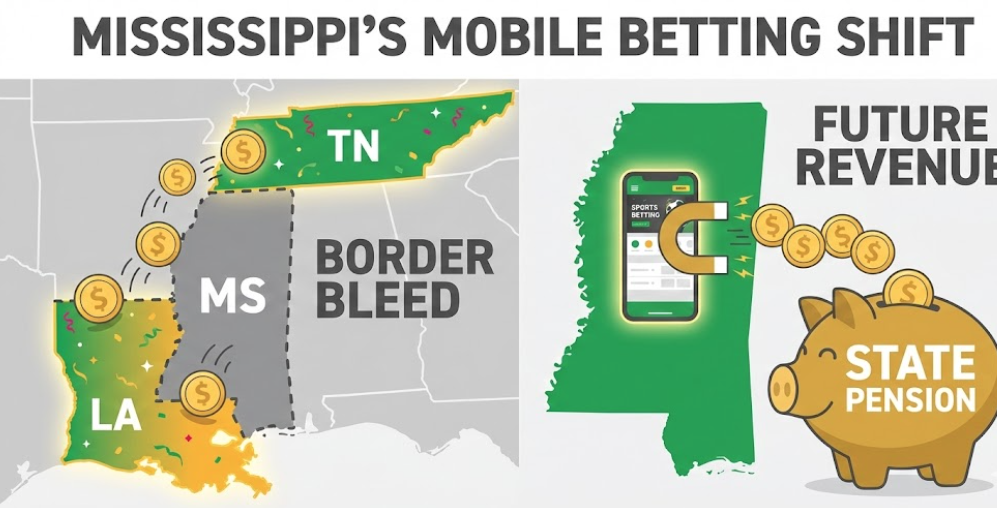
Every time a Mississippi resident drives across the state line to place a legal mobile wager in Louisiana or Tennessee, Mississippi loses tax revenue. Estimates suggest the state is torching between $40 million and $80 million annually by refusing to legalize statewide mobile betting. That is not just loose change; that is infrastructure money.
The new push isn't just about fun; it’s about stopping the "border bleed." Why let Tennessee build roads with Mississippi money?
The "Positive Effect": Your Bad Beat Saves a Pension
Here is the angle that might actually get this bill past the Senate (the traditional "final boss" of Mississippi gambling laws). The new legislation proposes directing mobile sports betting tax revenue into the Public Employees’ Retirement System (PERS).
The state pension fund is currently facing a massive deficit. By legalizing mobile betting, lawmakers are essentially turning your gambling losses into a social safety net. It’s a brilliant, if slightly cynical, marketing pivot.
-
The Old Argument: "Gambling is a vice."
-
The New Argument: "Do you hate retired teachers? No? Then let people bet on the SEC."
If passed, your disastrous 12-leg parlay isn't just a donation to DraftKings; it’s a charitable contribution to the state’s workforce. That is a "positive effect" even a politician can’t ignore.
The Retail Protection Racket
One reason Mississippi stalled for so long was the fear that mobile apps would kill the physical casinos. The powerful casino lobby worried that if you could bet from home, you wouldn't buy their $14 beers or book their hotel rooms.
To soothe these fears, the proposed legislation includes a "Retail Sports Wagering Protection Fund." If physical sportsbooks lose money because everyone switches to apps, the state will dip into a fund (capped at millions annually) to make them whole.
For the Punter: This doesn't change your life, but it explains why the casinos are finally on board. They get to launch their own apps (each casino can skin up to two platforms) and get insurance if foot traffic drops. It’s a win-win for the house.
The Bottom Line: Freedom is Coming
The days of being geofenced to a casino floor are numbered. The economic pressure from neighboring states, combined with the desperate need to plug the pension deficit, has created the perfect storm for legalization.
-
Better Lines: Competition means better odds. When MGM, FanDuel, and DraftKings fight for your business, you get the boosts.
-
Convenience: No more driving to Tunica for a Tuesday night MACtion wager.
-
Safety: You can stop using that sketchy offshore site that takes three weeks to process a Bitcoin withdrawal.
Mississippi was a pioneer in 2018. It fell behind in 2020. In 2026, it looks like the state is finally ready to play the game. Get your accounts ready—the geofence is coming down.